

Quality & Statistics Courses

-

-
Kaizen (Continual improvement tools)
-
This paper reports the study of kaizen as practised in a selection of Japanese companies. After discussing the general understanding of kaizen and proposing a clear definition, the paper describes the methodology of the study, and presents findings from the research, as a base model and comparing this with the data from other companies which is compared with other firms in the steel and automotive industries to assess uniformity. The paper concludes that kaizen evolves uniquely within each organization, following changes to the organization’s business environment. Detailed implementations vary considerably between organizations, but all rely on kaizen to achieve targets as an integral element in the operations management system.
- Price : 1 L.E
-
2 0
-
-
-
Balanced scorecard
-
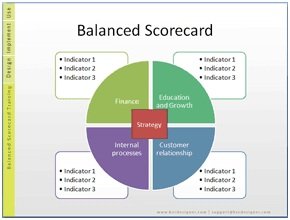
In recent years academic scholars have given increasing attention to the importance of strategic measurement systems including both non-financial and financial measures. One of the approaches adopted is that of the balanced scorecard. It is distinct from other strategic measurement systems in that it is more than an ad hoc collection of financial and non-financial measures. It contains outcome measures and the performance drivers of outcomes, linked together in cause-and-effect relationships, and thus aims to be a feed-forward control system. Furthermore, the balanced scorecard is intended not only as a strategic measurement system but also as a strategic control system which can align departmental and personal goals to overall strategy. This paper first examines the extent to which there is a cause-and-effect relationship among the four areas of measurement suggested (the financial, customer, internal-business-process and learning and growth perspectives). The paper then examines whether the balanced scorecard can link strategy to operational metrics which managers can understand and influence. Finally, it discusses and suggests some improvements to the balanced scorecard.
- Price : 1 L.E
-
2 0
-
-

-
FSMS (food safety management system )
-
• Conduct a hazard analysis. • Identify the critical control points (CCPs) in the process. • Establish critical limits for preventative measures for each CCP. • Establish CCP monitoring requirements and procedures for using the results of monitoring to adjust process and maintain control. • Establish corrective action to be taken when monitoring indicates that there is a deviation from a critical limit. • Establish record keeping procedures to document the HACCP system. • Establish procedures for verification that HACCP is working correctly.
- Price : 1 L.E
-
2 0
-
-
-
Key Performance Indicators
-
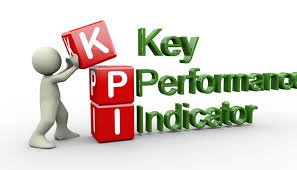
Is a type of performance measurement. KPIs evaluate the success of an organization or of a particular activity in which it engages. Often success is simply the repeated, periodic achievement of some levels of operational goal , and sometimes success is defined in terms of making progress toward strategic goals.
- Price : 1 L.E
-
20 0
-
-

-
ISO 26000 social responsibility
-
Business and organizations do not operate in a vacuum. Their relationship to the society and environment in which they operate is a critical factor in their ability to continue to operate effectively. It is also increasingly being used as a measure of their overall performance. ISO 26000 provides guidance on how businesses and organizations can operate in a socially responsible way. This means acting in an ethical and transparent way that contributes to the health and welfare of society.
- Price : 1 L.E
-
10 0
-
-
-
Quality costs
-
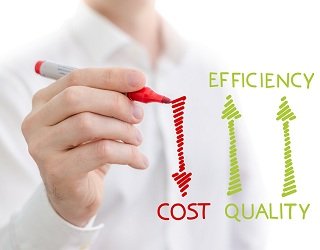
In process improvement efforts, quality costs or cost of quality is a means to quantify the total cost of quality-related efforts and deficiencies. It was first described by Armand V. Feigenbaum in a 1956 Harvard Business Review article.[1] Prior to its introduction, the general perception was that higher quality requires higher costs, either by buying better materials or machines or by hiring more labor. Furthermore, while cost accounting had evolved to categorize financial transactions into revenues, expenses, and changes in shareholder equity, it had not attempted to categorize costs relevant to quality, which is especially important given that most people involved in manufacturing never set hands on the product. By classifying quality-related entries from a company's general ledger, management and quality practitioners can evaluate investments in quality based on cost improvement and profit enhancement.
- Price : 1 L.E
-
10 0
-

Sponsers


