

Management Courses

-

-
Internal Audit
-
Audit program shall be planned taking into consideration status and importance of processes and areas and results of previous audits. Selection of auditors shall insure objectivity and impartiality of the audit process. Auditors shall not audit their own work. Documented procedures shall be established for conducting audits and reporting results. Responsible for areas audited shall ensure that actions are taken to eliminate causes of nonconformities.
- Price : 1 L.E
-
20 0
-
-

-
International Lead Auditor
-
Develop the knowledge and skill required to conduct a full audit of an organization's Quality Management System (QMS) to ISO 9001:2015. Gain the confidence to effectively audit a QMS in accordance with internationally recognized best practice techniques. Demonstrate your commitment to quality by transforming existing auditor skills to ISO 9001:2015. Consolidate your expertise with the latest developments and contribute to the continuous improvement of the business.
- Price : 1 L.E
-
20 0
-
-

-
Food expert, and references
-
Part I: provides HACCP system and its benefits and summarizes the seven principles of international knowledge to analyze the sources of danger at critical set point. * Part II looks at how to develop a HACCP plan from the beginning wanted persons and Arts Hazard Analysis to adjust the Critical Control points (CCPs) and what to do in the event of something improper. * Part III: explains in detail how the HACCP plan can be put into effect for both new and existing products, taking into account the HACCP system required for effective maintenance procedures. The HACCP is the acronym for Hazard Analysis at Critical control points. The HACCP system is a way to define the organization and assess the hazards and risks associated with the process of production. This allows management to focus technical resources on these vital steps that regulate product safety. The important point is to separate the evaluation of HACCP system to adjust the safety and those of the quality control systems do not even have a chance of interference.
- Price : 1 L.E
-
2 0
-
-

-
Maintenance operations management
-
The planning process and the implementation of preventive maintenance work does not represent only a brief way to reduce maintenance costs, but also represents an investment of capital and partial profit in the long term. But it found that the implementation of an effective preventive maintenance program we will get from the reality of the data and practical experience on the following features: Low maintenance cost / unit of production rate. Low-stop hours of productive machinery. Lower the cost of repair rate for capital investment. Consequently, we find that the timing of the implementation of preventive maintenance compared to maintenance treatment has shifted from when maintenance must be done to when you want to do maintenance work.
- Price : 1 L.E
-
10 0
-
-

-
Kaizen (Continual improvement tools)
-
This paper reports the study of kaizen as practised in a selection of Japanese companies. After discussing the general understanding of kaizen and proposing a clear definition, the paper describes the methodology of the study, and presents findings from the research, as a base model and comparing this with the data from other companies which is compared with other firms in the steel and automotive industries to assess uniformity. The paper concludes that kaizen evolves uniquely within each organization, following changes to the organization’s business environment. Detailed implementations vary considerably between organizations, but all rely on kaizen to achieve targets as an integral element in the operations management system.
- Price : 1 L.E
-
2 0
-
-
-
Balanced scorecard
-
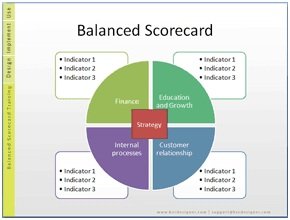
In recent years academic scholars have given increasing attention to the importance of strategic measurement systems including both non-financial and financial measures. One of the approaches adopted is that of the balanced scorecard. It is distinct from other strategic measurement systems in that it is more than an ad hoc collection of financial and non-financial measures. It contains outcome measures and the performance drivers of outcomes, linked together in cause-and-effect relationships, and thus aims to be a feed-forward control system. Furthermore, the balanced scorecard is intended not only as a strategic measurement system but also as a strategic control system which can align departmental and personal goals to overall strategy. This paper first examines the extent to which there is a cause-and-effect relationship among the four areas of measurement suggested (the financial, customer, internal-business-process and learning and growth perspectives). The paper then examines whether the balanced scorecard can link strategy to operational metrics which managers can understand and influence. Finally, it discusses and suggests some improvements to the balanced scorecard.
- Price : 1 L.E
-
2 0
-

Sponsers


